Many leaders rise through technical expertise. That is an advantage. But in times of uncertainty, it is no longer sufficient. A person may excel at problem-solving and have strong professional knowledge, yet still struggle when guiding a team through constant change. In many Vietnamese SMEs, leadership capability remains a critical challenge, with leaders often limited in their ability to guide, innovate, and globalize.
Why Expertise Alone Cannot Lead a Team
Technical excellence helps individuals achieve outstanding personal results. However, leadership is no longer measured by “how well I perform,” but by “whether my team is progressing.” This shift is one of the most difficult transitions:
- From solving problems directly → to enabling others to solve them
- From focusing on individual performance → to creating collective effectiveness
The Trap of Technical Excellence
Highly skilled individuals often have a natural reflex: when they see a problem, they jump in to fix it immediately. While this ensures quick results, it creates a hidden trap in leadership.
When leaders constantly “rescue” the team:
- Team members lose initiative
- Decision-making becomes centralized
- Collective capability fails to grow
Over time, the most capable individual becomes the bottleneck, unintentionally taking on the work of the entire team. Leadership is not about being the fastest problem-solver, but about enabling the team to perform effectively without dependence.
In Uncertainty, Teams Need Direction
Research shows that over 63% of employees do not clearly understand their company’s vision. In stable environments, correct answers often come from expertise. But in uncertainty, what teams lack is not just answers—it is direction.
When everything is shifting:
- Priorities are constantly disrupted
- Plans lose certainty
- Pressure spreads across the organization
At this point, the leader’s role is not to know everything, but to help the team understand what truly matters, maintain focus, and avoid being overwhelmed by chaos. Teams can endure difficulty, but they struggle to perform without a clear sense of direction.
The Hardest Part: Building and Sustaining Trust
Trust is often overlooked, yet it directly impacts speed and cost within organizations—especially as trust crises become more prevalent. When trust is low, work slows down, requiring more control, approvals, and meetings. These are the hidden “trust taxes” organizations pay.
In uncertain times, trust becomes even more fragile. This is when leadership capability is truly tested. Leaders cannot rely on expertise alone to build trust—they must cultivate it through consistent behavior and the ability to create psychological safety.
Managing Work vs. Leading People
Managing work focuses on setting goals, planning, tracking progress, and ensuring processes are followed. Leading people, however, is about helping individuals understand why their work matters, find meaning, and take ownership.
That is why some managers maintain strict control, yet their teams only do the minimum required. In contrast, true leaders create teams that are more proactive, engaged, and willing to go the extra mile. This is the difference between completing tasks and building a team that can grow with the organization.
Signs of Strong Expertise but Weak Leadership
These signs are often subtle but appear repeatedly in daily operations:
- Teams work hard but lack initiative
- Decisions rely heavily on top management
- Work progresses slowly despite frequent discussions
- Responsibilities remain unclear after meetings
- Individuals perform their roles but lack coordination
- Departments operate in silos
- Leaders must step in to resolve issues
- Work slows down in the leader’s absence
- Accountability is unclear
- High performers lose motivation
- Goals are interpreted differently by each person
- Results depend on individuals rather than the team
What Leaders Need Beyond Expertise
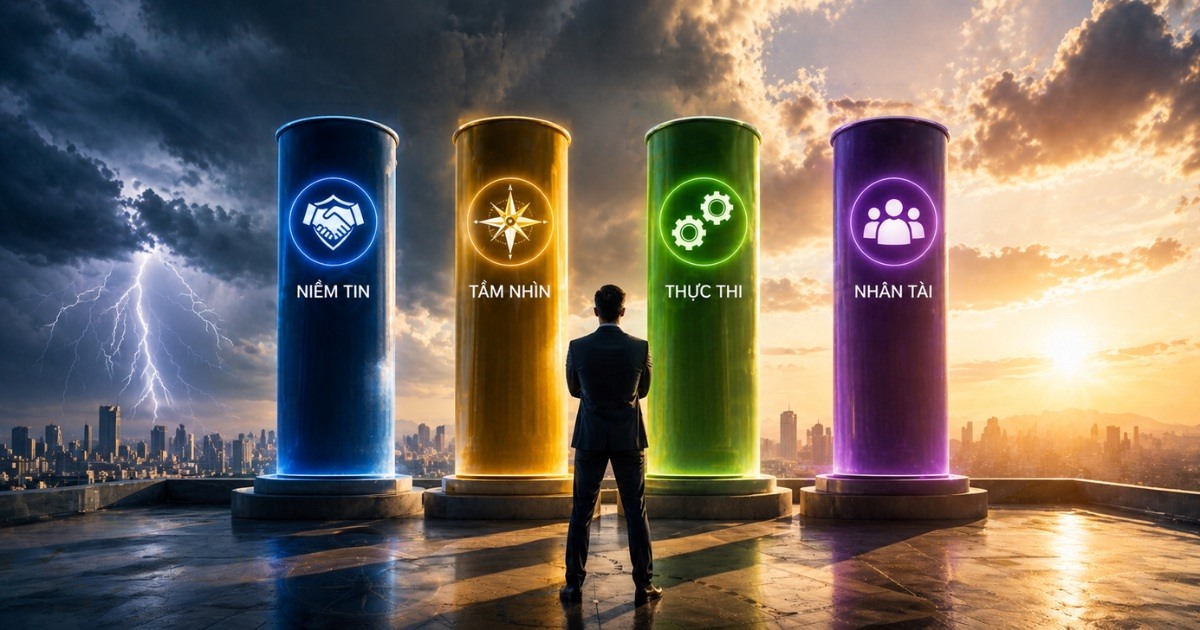
To guide teams effectively through uncertainty, leaders need more than knowledge and experience. Leadership capability is built on four core pillars:
Build Trust
Organizations with high-trust cultures consistently outperform those with low trust. In fact, high-trust organizations can generate nearly three times the profit.
In times of uncertainty, leaders cannot control everything—but they can create an environment where people feel confident to act. Trust becomes the starting point of effective leadership.
Leaders build trust when they:
- Act with consistency and integrity
- Demonstrate clear and genuine intent
- Show real capability, not just words
- Deliver consistent performance over time
Create Vision
One of the most important questions teams ask is: “Where are we going?”
Vision is not just a goal—it must be clear enough for everyone to align with. This reflects Habit 2: Begin with the End in Mind. Leaders must help their teams understand the destination, why it matters, and what should be prioritized.
When vision is clear and meaningful, teams gain stronger commitment, coordination, and action—especially in uncertain times.
Execute Strategy
Leaders must translate vision into consistent action—through and with others. This requires a clear execution system that helps teams focus on priorities and maintain momentum.
In a constantly changing environment, leaders must ensure clarity of focus. Instead of pushing for speed alone, they must build a strong execution system that keeps the organization aligned under pressure.
Unlock Team Potential
“Leadership is communicating people’s worth and potential so clearly that they are inspired to see it in themselves.” – Stephen R. Covey
While expertise enables individual success, leadership is about enabling collective growth. When individuals feel valued, empowered, and supported, teams become more proactive, engaged, and resilient.
At that point, results are no longer dependent on one leader—but on the collective strength of the entire team.
From Individual Contributor to Leader: Where to Begin?
The gap between doing one’s job well and leading a team forward lies in a deeper shift in leadership mindset—especially critical in times of uncertainty.
Reflect on Your Role
When challenges arise, many leaders instinctively step in to solve problems. However, repeated intervention creates dependency and traps leaders in daily operations.
Reflection is not about stepping back, but about shifting focus—from solving problems to enabling the team to solve them. When perspective changes, actions change—and leadership begins to take shape.
Create Conditions for Team Growth
In uncertain times, strong teams are those where individuals can act independently and confidently. This requires clarity, trust, and consistency.
When goals are clear, expectations aligned, and accountability well-defined, teams move from waiting for instructions to taking initiative. Leaders then become enablers rather than central operators.
Focus on the Four Core Leadership Pillars
To balance expertise with leadership capability, leaders must invest in these foundational pillars. These are the drivers of long-term influence and sustainable growth.
Technical expertise is the foundation. But to guide teams through uncertainty, leaders must go beyond it. This is the moment for every leader to reflect: which capabilities need strengthening for the team to move forward with confidence?